
Migraine and Sleep in Teens: A Key Part of Migraine Treatment
Sleep is a key part of managing migraine in teens. Research shows that problems with migraine and sleep, like poor sleep quality, irregular bedtimes, or too much screen time, can make migraine attacks more frequent and severe. Whether you’re a teen dealing with migraine, a parent supporting a teen, or managing your own migraine, understanding how sleep affects migraine can be an important part of effective migraine treatment.
Good sleep will not magically make migraine disappear. Migraine is a complex neurological condition. But research shows that poor sleep quality can cause more frequent and severe migraine attacks. The good news is that small changes to sleep habits may help support your brain and body over time.
For many teens, sleep is one of the hardest parts of migraine management. Early school start times, homework, sports, social plans, and screens can all get in the way. Understanding why sleep is a key part of migraine treatment can help families make changes that feel realistic and supportive. For more on pediatric migraine basics and how it affects school life, see 5 Things Parents Must Know About Migraine.
HOW SLEEP AFFECTS MIGRAINE IN TEENS
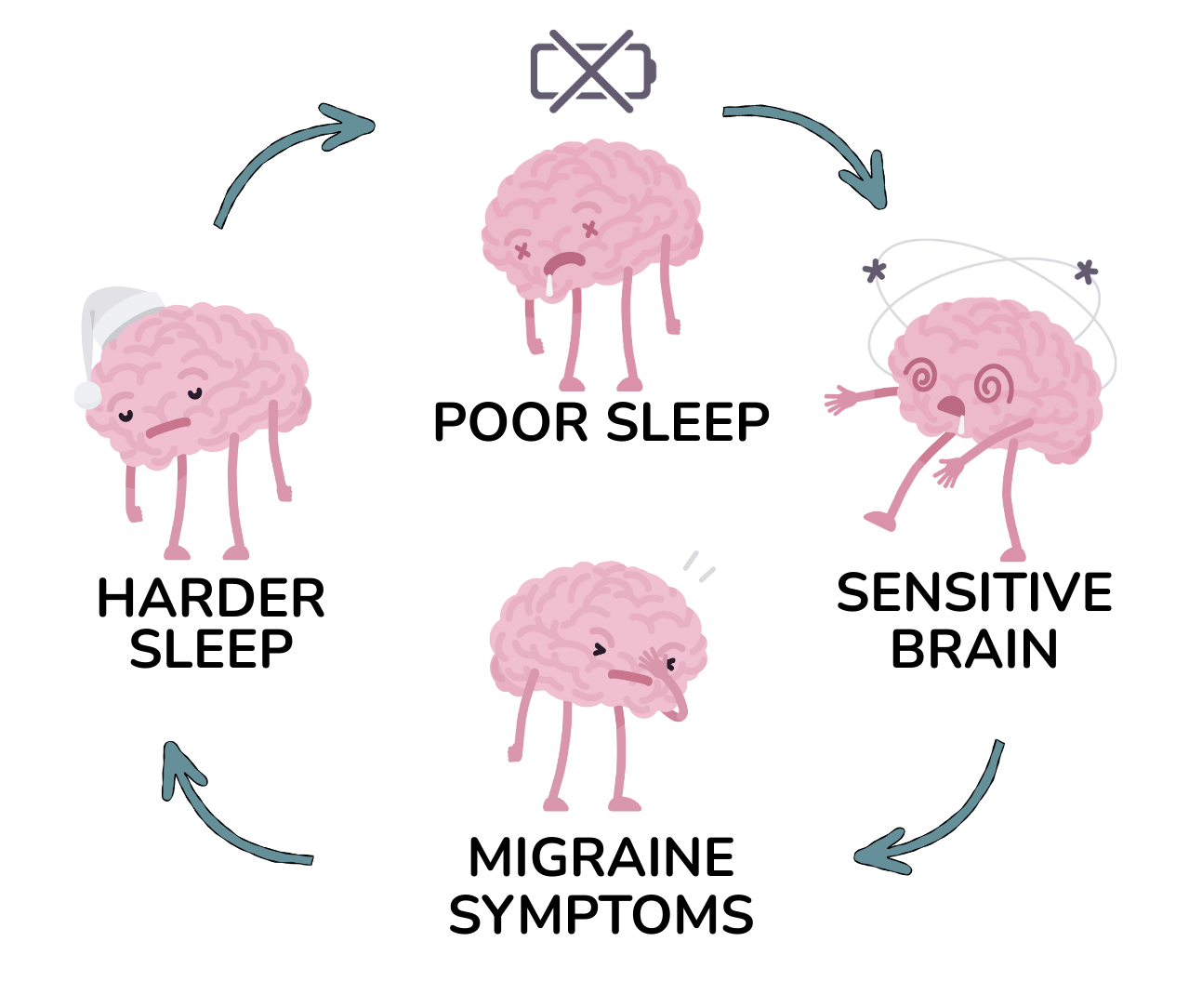
The Two-Way Relationship Between Migraine and Sleep
Poor sleep quality can trigger migraine attacks. At the same time, migraine symptoms like head pain, nausea, dizziness, and sensitivity to light or sound can make it harder to fall asleep or stay asleep. This creates a cycle that can make getting real sleep harder.
Studies show that people with migraine are more likely to experience sleep problems, including:
Trouble falling asleep
Waking up during the night
Feeling tired even after a full night of sleep
These sleep challenges can happen even on days when there is no active migraine attack. Over time, ongoing poor sleep quality may increase how sensitive the brain is to migraine triggers.
WHY POOR SLEEP QUALITY CAN TRIGGER MIGRAINE ATTACKS
Your body has an internal clock that helps control sleep, hormones, energy, and even pain processing. This clock works best when sleep happens at regular times.
When sleep schedules change often, that internal clock can get confused. For people with migraine, this confusion may increase the risk of an attack.
Things that may increase migraine risk include:
Going to bed late and waking up early
Sleeping in much later on weekends
Staying up late on phones, tablets, or gaming systems
Not getting enough sleep during the school week
Many people notice migraine attacks after nights of poor or irregular sleep. Some people even wake up with migraine symptoms when their sleep schedule is off. This is especially common during busy school weeks or after weekends with very different sleep routines.
SLEEP AND THE TEEN BRAIN

Teen brains are still developing, especially the parts responsible for decision making, emotional regulation, and stress response. At the same time, teens often have packed schedules and high expectations placed on them. It means none of this is easy. Being a teenager is really hard. Being a teenager with migraine disorder is much harder.
Late nights during the week, followed by sleeping in on weekends, can throw off sleep rhythms. This can make the brain more sensitive to migraine triggers like stress, dehydration, skipped meals, and screen use.
For teens with migraine, disrupted sleep may lead to:
More frequent migraine attacks
Harder recovery days after an attack
Difficulty concentrating at school
Increased stress or anxiety
Supporting healthy sleep is not about being perfect. It is about helping the brain feel more predictable and supported.
WHAT RESEARCH TELLS US ABOUT MIGRAINE AND SLEEP
Research consistently shows that people who report poor sleep quality also report a higher migraine burden.
This can include:
More frequent migraine attacks
Stronger pain
Greater difficulty keeping up with school or work
Higher levels of stress, anxiety, or low mood
On the other hand, better sleep quality is linked with fewer migraine days and improved quality of life for many people. Sleep does not fix everything, but it is an important piece of migraine treatment, especially for teens navigating school and growing responsibilities.
SIMPLE SLEEP TIPS FOR MIGRAINE TREATMENT IN TEENS
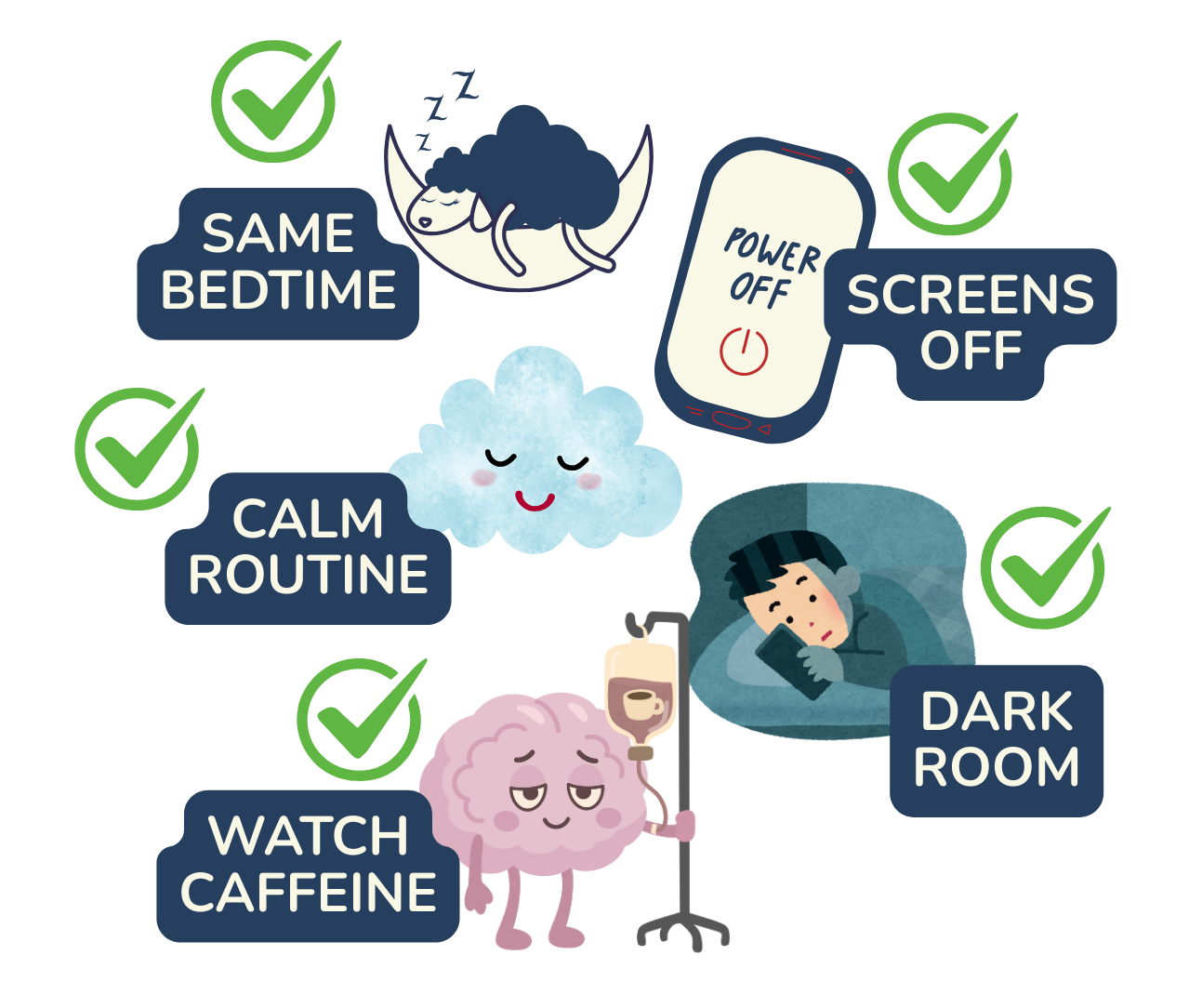
These sleep habits are often recommended as part of migraine treatment for teens.
Stick to a Schedule to Support Migraine Treatment
Try to go to bed and wake up at the same time every day, even on weekends. We know that sounds awful, but even small differences can matter. Consistency helps your brain know when it is time to rest.
Create a Wind Down Routine to Improve Migraine and Sleep
Give your brain time to slow down before bed. Turn off phones and screens at least 30 minutes before sleep. Reading, stretching, journaling, or listening to calming music can help. Many teens enjoy low volume lofi or instrumental music. These are easily found on Spotify or YouTube.
Make Your Room Sleep Friendly to Reduce Migraine Attacks
A dark, cool, and quiet room supports better sleep. Blackout curtains, white noise, or a fan can help reduce disruptions. Comfort matters more than perfection. Lean into that bed rot.
Watch Caffeine Timing to Protect Migraine and Sleep
Energy drinks, soda, coffee, and pre workout supplements can stay in your system for hours. Having caffeine too late in the day can make it harder to fall asleep.
Ask For Help If Sleep Is Hard
If falling asleep or staying asleep feels impossible, talk with a healthcare provider. Sleep support can be part of migraine care and may include lifestyle changes, therapy, or medical guidance.
SLEEP AND MIGRAINE AT SCHOOL

Sleep affects how migraine shows up during the school day. Poor sleep may lead to:
Migraine attacks starting at school
Trouble focusing or remembering information
Increased sensitivity to lights, noise, or screens
More visits to the school nurse
Helping teens get consistent sleep can support not only migraine management but also learning, mood, and attendance. Schools, families, and students all play a role in creating realistic routines that support health.
QUICK TAKE FOR TEENS
If you live with migraine, sleep is not just about feeling rested. Sleep helps your brain stay calm and better handle triggers. You do not need perfect sleep. You need more consistent sleep. Small changes can add up over time.
MIGRAINE AND SLEEP FAQ
Can poor sleep really cause a migraine attack?
Poor sleep does not cause migraine by itself, because migraine is a neurological disorder. However, poor sleep can trigger migraine attacks in people who already live with migraine. Missing sleep, staying up late, or having an irregular sleep schedule can make the brain more sensitive and increase the chance of an attack.
Can sleeping too much trigger a migraine attack?
Yes, for some people. Sleeping much later than usual on weekends or days off can disrupt the body’s internal clock. This change can sometimes trigger migraine symptoms, even if you are trying to catch up on rest.
Why do migraine attacks often happen in the morning?
Many people wake up with migraine symptoms when their sleep is disrupted. Poor sleep quality, overnight dehydration, skipped meals, or changes in sleep schedule can all play a role. For some, migraine symptoms start during sleep and become noticeable when they wake up.
How many hours of sleep do teens with migraine need?
Most teens need about eight to ten hours of sleep each night. The exact number can vary, but consistency matters just as much as total hours. Going to bed and waking up at the same time every day helps the brain function better.
Do screens before bed affect migraine and sleep?
Yes. Screens emit light that can interfere with the brain’s ability to get sleepy. Scrolling, gaming, or watching videos late at night can make it harder to fall asleep and may increase migraine risk. Turning off screens at least 30 minutes before bed can help.
Can naps help or hurt migraine?
Short naps can be helpful for some people, especially during a migraine attack. Long or late afternoon naps may make it harder to fall asleep at night and disrupt sleep schedules. If naps are needed, keeping them short and earlier in the day is often best.
What if my teen tries everything and still cannot sleep?
If sleep problems continue despite good habits, it is important to talk with a healthcare provider. Sleep challenges are common in people with migraine and may need extra support. Getting help is part of migraine care, not a failure.
How does sleep affect migraine at school?
Poor sleep can make migraine attacks more likely during the school day. It can also affect focus, memory, mood, and energy. Supporting better sleep can help teens manage migraine symptoms and feel more supported at school.
FINAL THOUGHT
Supporting healthy sleep habits may help reduce migraine attacks and make daily life feel more manageable for teens and families.
If sleep feels like a struggle, you are not failing. You are learning what your brain needs. You’ve got this!
Learn more about how Migraine at School supports students living with migraine.
RESEARCH AT A GLANCE
This article is informed by current migraine and sleep research and expert guidance from trusted, independent health organizations, including:
National Institutes of Health
Peer reviewed research examining the two way relationship between sleep problems and migraine.UCLA Health
Research showing that poor sleep is linked to more frequent and more severe migraine attacks.University of Arizona Health Sciences
Studies connecting poor sleep quality with increased migraine risk.Association of Migraine Disorders
Education and expert resources on the relationship between migraine and sleep.